
Half-Round Gutter Installation in Litchfield Connecticut
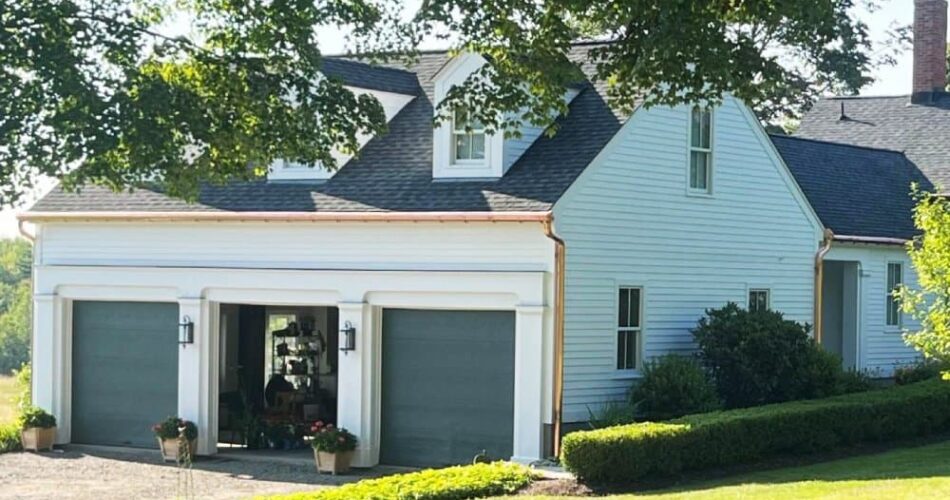
If you live in Litchfield, you know the region’s architecture is more traditional and historic than what you’ll find elsewhere in Connecticut. Classic Colonial homes, older farmhouses, barns converted into residences, and newer builds designed with traditional trim all shape which type of gutter system looks and performs best. One option more homeowners are asking about is half-round gutter installation.
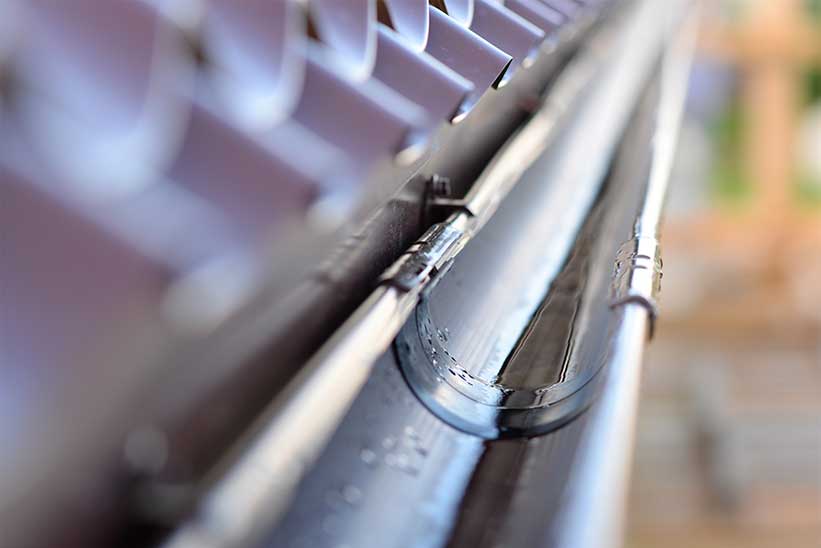
Half-round gutters follow the roofline with a smooth curve that mirrors traditional New England design. They are also easier to maintain in many cases because the rounded interior shape allows water to flow smoothly toward downspouts when properly sized and pitched. You can learn more about half-round gutters here.
Why Half-Round Gutters Fit Litchfield’s Architecture
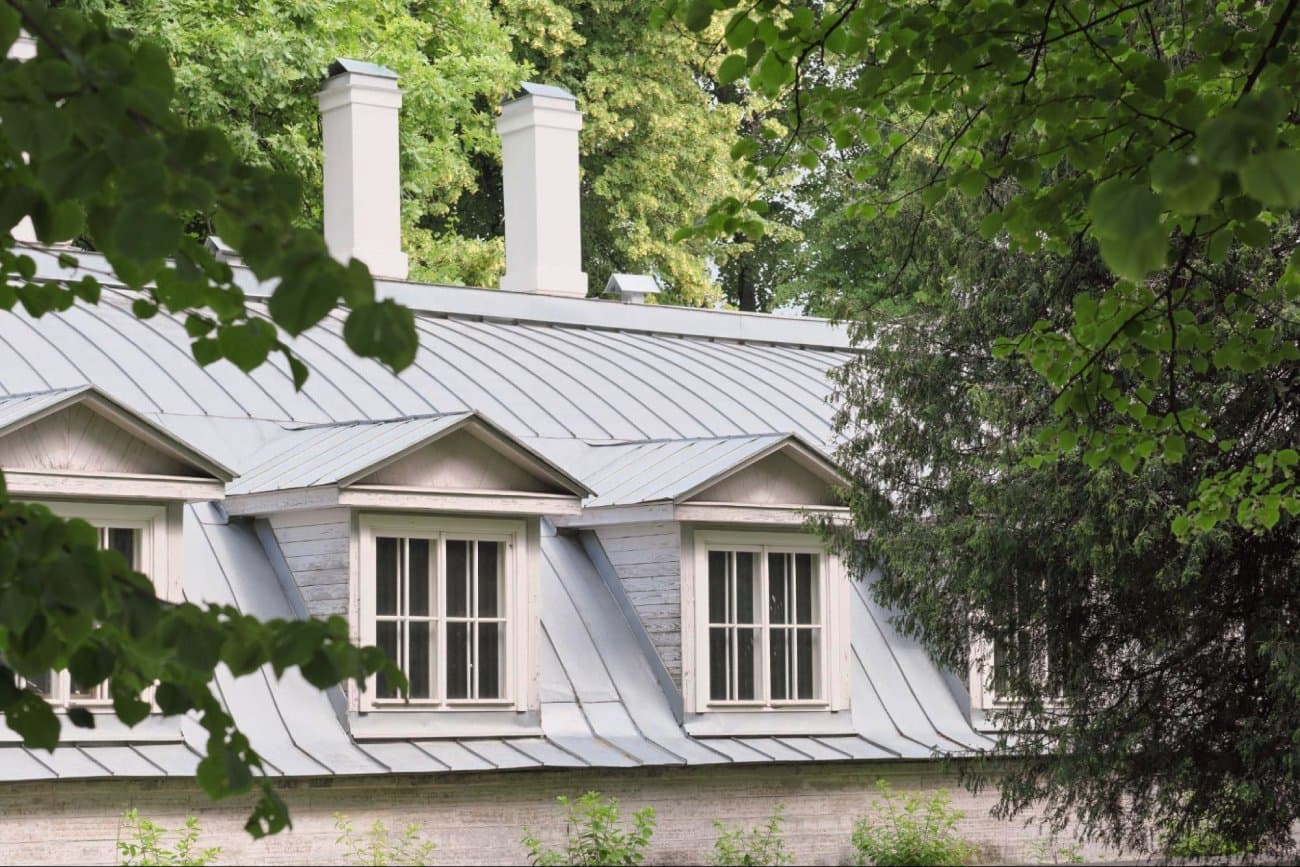
In the center of Litchfield and surrounding roads such as Route 202, a large percentage of homes were built with detailed fascia boards, wood trim, or exposed rafter tails. These are areas where a modern K-style gutter can sometimes look bulky or out of place. Half-round gutters sit more naturally with traditional trim profiles and historic design elements.
George explains it this way: “In Litchfield, the house usually drives the decision. When trim and fascia are more defined, half-round gutters tend to look correct instead of added on.”


Historic, Farmhouse, and Barn-Style Homes
- Historic Colonials
- Pastoral/farmhouse properties
- Converted barns
- Wood-trimmed homes with exposed rafters
- Homes with traditional fascia profiles
If you are working to preserve or restore a home’s appearance, half-round gutters generally draw less attention and protect exposed roof edges without changing the architectural character.
Copper Options for Litchfield Homes
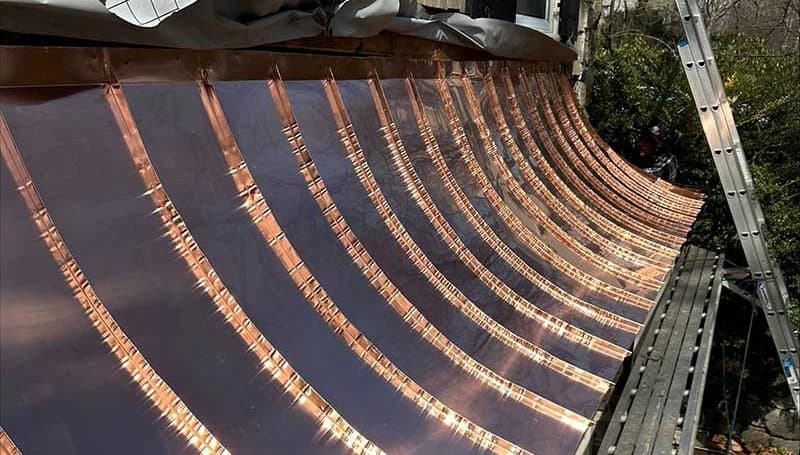
Copper half-round gutters are a frequent upgrade for long-term Litchfield homeowners. Copper ages in stages, eventually developing a patina that blends well with stone, clapboard siding, and older rooflines.
George’s opinion is straightforward: “If a homeowner plans to stay in their Litchfield home long term, copper is usually worth discussing. It’s not a quick trend. It looks better as it ages.”


Metal Roofing and Half-Round Gutters
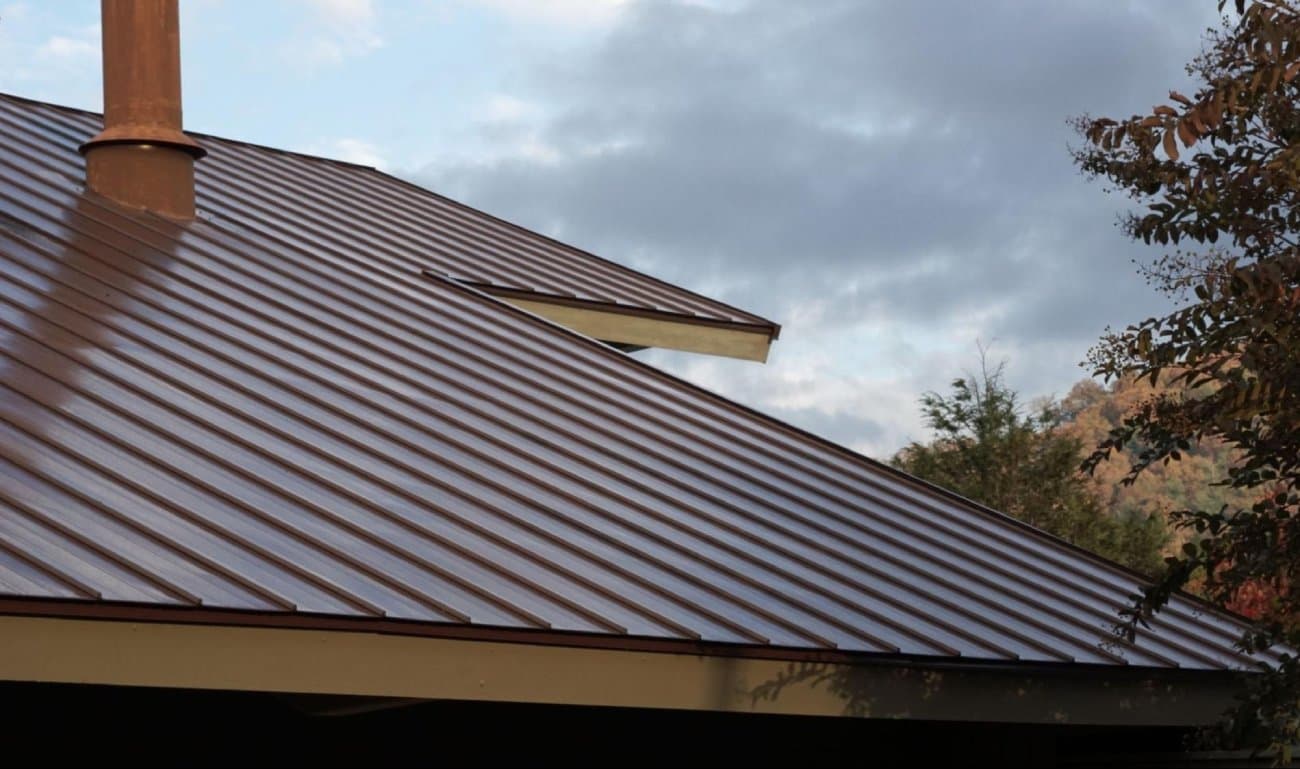
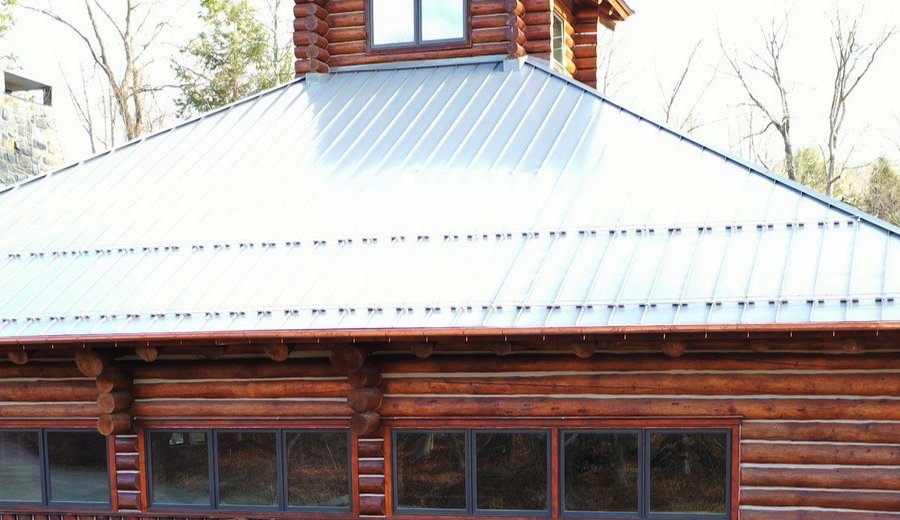
Metal roofing is common in Litchfield and the Northwest Hills. Standing seam metal sheds snow quickly, which means gutters need strong fastening, correct spacing, and sometimes snow guards. Half-round gutters can work well with metal roofing when they’re installed as a coordinated system.
More details on metal roofing options here.
George notes, “Metal roofing and gutters should be designed as one system. We look at how snow moves and where it ends up, not just where to attach the gutter.”
Weather Performance in Litchfield Connecticut
Half-round gutters can perform well in the region’s heavy rain, wet snow, and frequent freeze-thaw cycles. Because the inside of the gutter is smooth, water and debris tend to move through predictably if the gutter is sized and pitched correctly. Because older homes have more variation in roof edge conditions, professional installation matters more than the style itself.
Learn more about gutter installation here.

When Half-Round Gutters Make the Most Sense
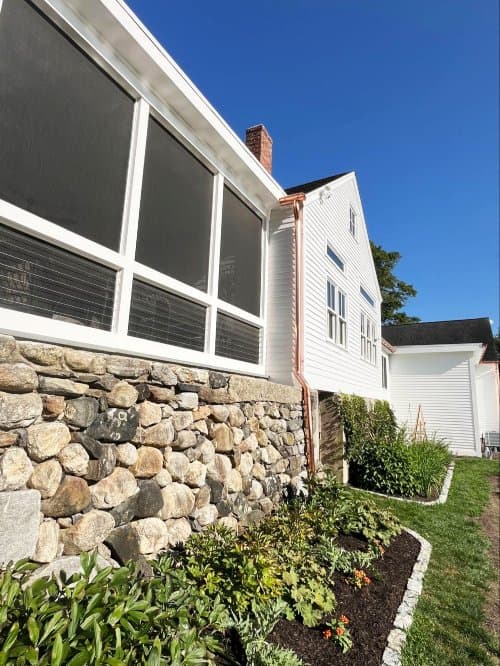
Half-round gutters are often the best choice if:
- You own a historic or farmhouse property
- Your home has exposed rafter tails or detailed fascia
- You prefer a gutter that blends in instead of standing out
- You want long-term value and a natural patina (with copper)
- You are upgrading your roof to metal and want coordinated detailing
When Half-Round Gutters Make the Most Sense
- You own a historic or farmhouse property
- Your home has exposed rafter tails or detailed fascia
- You prefer a gutter that blends in instead of standing out
- You want long-term value and a natural patina (with copper)
- You are upgrading your roof to metal and want coordinated detailing
George summarizes this approach clearly: “We’re not trying to install copper or half-round gutters on every house. We’re trying to help homeowners pick something that makes sense over time for the house and the homeowner.”